
Your Location:Home > Products > Pharmaceutical intermediates >120-72-9
Product Details
|
description |
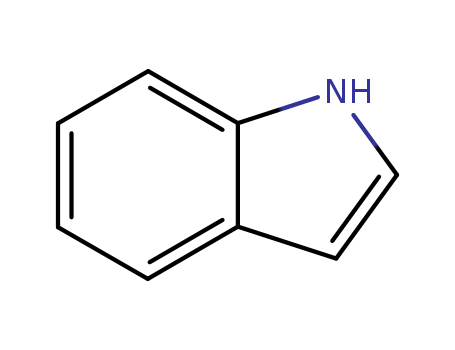
Indole, also called Benzopyrrole, an aromatic heterocyclic organic compound occurring in some flower oils, such as jasmine and orange blossom, in coal tar, and in fecal matter. It has a bicyclic structure, consisting of a six-membered benzene ring fused to a five-membered nitrogen-containing pyrrole ring. It can be produced by bacteria as a degradation product of the amino acid tryptophan. It occurs naturally in human feces and has an intense fecal smell. This off flavour occurs in beer due to contaminant coliform bacteria during the primary fermentation stage of beer brewing. At very low concentrations, however, it has a flowery smell, and is a constituent of many flower scents (such as orange blossoms) and perfumes. Natural jasmine oil, used in the perfume industry, contains around 2.5% of indole. Indole also occurs in coal tar. The participation of the nitrogen lone electron pair in the aromatic ring means that indole is not a base, and it does not behave like a simple amine. Indoles are important precursors for other substances made within the human body and are, therefore, researched and used in lifestyle and medical applications. The compound was officially discovered in 1866 by a scientist working with the properties of zinc dust who reduced oxindole from the zinc dust into an indole. After the discovery, indoles became important constituents of the textile industry, and as more research was conducted, the larger role that indoles played within the human body system was realized. The indolic nucleus in substances like tryptophan and auxin has led to a better understanding of their mechanism within the body. |
|
Content analysis |
Press GT-10-4 gas chromatography method for the determination with polar column. Using the polar column method in GT-10-4 gas chromatography to determine the content of indole. |
|
Control of Bacterial Processes |
As an intercellular signal molecule in both gram-positive and gram-negative bacteria, indole regulates various aspects of bacterial physiology, including spore formation, plasmid stability, resistance to drugs, biofilm formation, and virulence. Indole has been shown to control a number of bacterial processes such as spore formation, plasmid stability, drug resistance, biofilm formation, and virulence. Indole may have anticarcinogenic activity. Commonly synthesized from phenylhydrazine and pyruvic acid, although several other procedures have been discovered, indole also can be produced by bacteria as a degradation product of the amino acid tryptophan. |
|
Toxicity |
GRAS(FEMA)。 LD50 1000 mg/kg(test with rat orally). |
|
Utilization limitation |
FEMAmg/kg:soft drinks:0.26;cold drinks:0.28;candy:0.50;bakery product :0.58;pudding:0.02~0.40. Moderate limit (FDA§172.515,2000) |
|
Chemical property |
It is the shiny flaky white crystals, and would turn into dark colors when it exposed to light. There would be a strong unpleasant odor with high concentration of indole, but the flavor would change into oranges and jasmine after highly diluted (concentration <0.1%). It has the melting point of 52~53 ℃ and the boiling point of 253~254 ℃. It is soluble in alcohol, ether, hot water, propylene glycol, petroleum ether and most of the non-volatile oil, insoluble in glycerin and mineral oil. Natural indole are widely contained in neroli oil, orange oil, lemon oil, lime oil, citrus oil, peel oil, jasmine oil and other essential oil. |
|
Physical properties |
Colorless to yellow scales with an unpleasant odor. Turns red on exposure to light and air. Odor threshold of 0.14 ppm was reported by Buttery et al. (1988). |
|
Definition |
indole: A yellow solid, C8H7N, m.p.52°C. Its molecules consist of a benzenering fused to a nitrogen-containingfive-membered ring. It occurs insome plants and in coal tar, and isproduced in faeces by bacterial action.It is used in making perfumes.Indole has the nitrogen atom positionednext to the fused benzenering. An isomer with the nitrogentwo atoms away from the fused ringis called isoindole. |
|
Preparation |
Obtained from the 220 to 260°C boiling fraction of coal tar or by heating sodium phenyl-glycine-o-carboxylate with NaOH, saturating the aqueous solution of the melt with CO2 and finally reducing with sodium amalgam; can be prepared also by the reduction of indoxyl, indoxyl carboxylic acid or indigo. |
|
Aroma threshold values |
Detection: 140 ppb |
|
Synthesis Reference(s) |
The Journal of Organic Chemistry, 55, p. 580, 1990 DOI: 10.1021/jo00289a036Chemical and Pharmaceutical Bulletin, 35, p. 1823, 1987 DOI: 10.1248/cpb.35.1823 |
|
General Description |
Indole is classified under the volatile flavor compounds (VFCs). It is known to play significant role in various biological functions such as anti-inflammatory, anticonvulsant, cardiovascular and antibacterial activities. |
|
Hazard |
A carcinogen. |
|
Health Hazard |
Low to moderate toxicity was observed inexperimental animals resulting from oral orsubcutaneous administration of indole. Theoral LD50 value in rats is 1000 mg/kg. It is ananimal carcinogen. It caused tumors in bloodand lungs in mice subjected to subcutaneousadministration. |
|
Fire Hazard |
Noncombustible solid. |
|
Flammability and Explosibility |
Notclassified |
|
Biochem/physiol Actions |
Taste at 0.3-2 ppm |
|
Source |
Indole was detected in jasmine flowers (Jasminum officinale), licorice (Glycyrrhiza glabra), kohlrabi stems (Brassica oleracea var. gongylodes), and hyacinth flowers (Hyacinthus orientalis) at concentrations of 42 to 95, 2, 1.33, and 0.24 to 3.45 ppm, respectively. Indole also occurs in tea leaves, black locust flowers, corn leaves, petitgrain, and yellow elder (Duke, 1992). A liquid swine manure sample collected from a waste storage basin contained indole at a concentration of 4.8 mg/L (Zahn et al., 1997). |
|
Environmental fate |
Biological. In 9% anaerobic municipal sludge, indole degraded to 1,3-dihydro-2H-indol-2-one (oxindole), which degraded to methane and carbon dioxide (Berry et al., 1987). Heukelekian and Rand (1955) reported a 5-d BOD value of 1.70 g/g which is 65.4% of the ThOD value of 2.48 g/g. Chemical/Physical. The aqueous chlorination of indole by hypochlorite/hypochlorous acid, chlorine dioxide, and chloramines produced oxindole, isatin, and possibly 3-chloroindole (Lin and Carlson, 1984). |
|
Metabolic pathway |
The indole is metabolized in a mineral salt medium inoculated with 9% anaerobically digested nitrate- reducing sewage sludge, resulting in the sequential occurrence of four structurally related compounds: oxindole, isatine, dioxindole, and anthranilic acid. Indole is metabolized by fungus via indoxyl (3-hydroxyindole), N-formylanthranilic acid, anthranilic acid, 2,3-dihydroxybenzoic acid, and catecol, which is further degraded by an ortho cleavage. |
|
Metabolism |
Indole is oxidized to 3-hydroxyindole (indoxyl) which is conjugated with glucuronic and sulphuric acids before excretion. The sulphate conjugate seems to be the main product in rabbits and, even with relatively large doses of indole, the sulphate conjugation always exceeds that of glucuronic acid(Williams, 1959). |
|
Purification Methods |
It can be further purified by sublimation in a vacuum or by zone melting. The picrate forms orange crystals from EtOH and has m 175o. [Beilstein 20 II 196, 20 III/IV 3176, 20/7 V 5.] |
|
Toxicity evaluation |
Indole causes oxidative damage to membranes. |
InChI:InChI=1/C8H7N/c1-2-4-8-7(3-1)5-6-9-8/h1-6,9H
-
A concise, fast and efficient one-pot me...
BN 2-vinylnaphthalene, a BN aromatic vin...
Tryptophan indole-lyase (Trpase), PBPRA2...
New entries to the [Ru(Cp/Cp*)(PR2NR′2)(...
An efficient silver(I)-catalyzed method ...
The molybdenum-promoted cycloisomerizati...
Heterogeneous noble-metal-based catalysi...
Low-valent ruthenium complexes with a π-...
The exploitation of new and active earth...
Elucidation of the mechanism for decarbo...
-
2,3-Dichloro-5,6-dicyanobenzoquinone (DD...
Indoline (1) and 2-methylindoline (2) ha...
Reaction rates and equilibrium constants...
New methods of L-ascorbic acid derivatiz...
Oxidation of indoline with 30% hydrogen ...
-
A simple and robust chemosensing approac...
Indol-3-yl 1-methyl-1,2,5,6-tetrahydropy...
Two indole alkaloids with defense relate...
Pt metal nanoparticles loaded on various...
The vapour-phase synthesis of indole and...
With the ClO2/ClO2- couple as reference ...
The primary products, i.e., the radical ...
-
A direct transition metal-free regiosele...
-
The crystalline structure of titania sup...
In the liquid-phase synthesis of indole ...
-
-
Cyclic amino acids L-proline, pipecolini...
The 2,2,6,6-tetramethylpiperidin-1-yloxy...
The electrochemical method is used for i...
The synthesis of various triindolylmetha...
A new synthetic and modular access to a ...
Tryptophan indole-lyase from Escherichia...
Indolines (1) have been converted to the...
A Pd(0)-catalyzed elimination of an ally...
The kinetics of the hydrolysis of indome...
-
By developing a new and efficient dinucl...
A relatively simple method for obtaining...
(Matrix presented) The use of an in situ...
A visible light-induced decarboxylative ...
Catalysts containing 0.15 - 0.5 percent ...
An odor-based sensor system that exploit...
Single-atom catalysts (SACs) have been e...
Apparent equilibrium constants and calor...
N-doped porous carbon (NC) was synthesiz...
C(aryl)–C(═O) bonds of aryl amides can b...
A highly chemoselective hydrosilylation ...
The dearomative dicarboxylation of stabl...
C17H18N2


indole

C6H4NCH2CHCCH2

8-methylquinoline
o-toluidine
| Conditions | Yield |
|---|---|
|
at 800 ℃;
for 0.75h;
under 0.004 Torr;
Further byproducts given. Title compound not separated from byproducts;
|
40 % Chromat. 40 % Chromat. 4 % Chromat. |

1-indoline
indole

hydrogen
| Conditions | Yield |
|---|---|
|
With
tetrakis(acetonitrile)palladium(II) bis(tetrafluoroborate); potassium hexafluoroantimonate; 9-(2-mesityl)-10-methylacridinium perchlorate;
In
dichloromethane;
at 20 ℃;
for 21h;
Irradiation;
Inert atmosphere;
|
61% |

3-Methylindole

tetrachloromethane
1-indoline
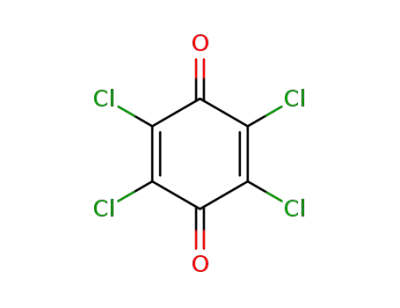
chloranil
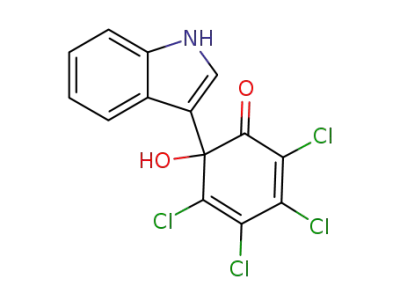
2,3,4,5-tetrachloro-6-hydroxy-6-indol-3-yl-cyclohexa-2,4-dienone
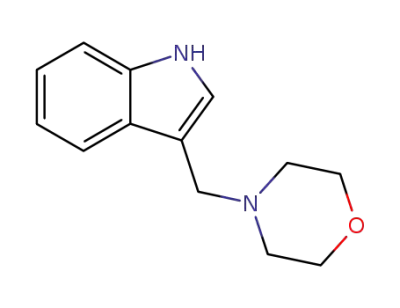
N-morpholinyl-3-indolylmethylamine
indole-3-carbinol
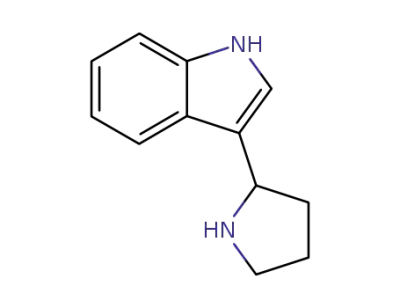
3-(2-Pyrrolidinyl)-indol
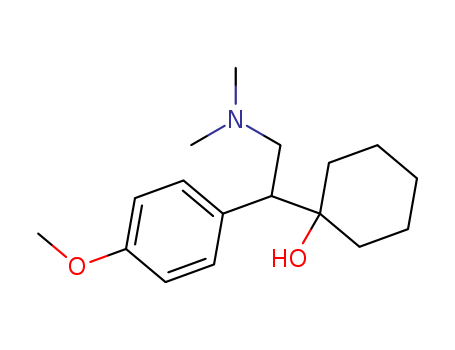
CAS:93413-69-5
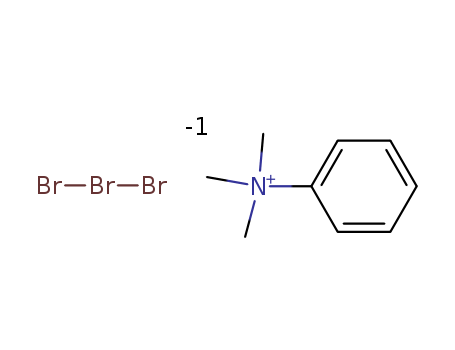
CAS:4207-56-1
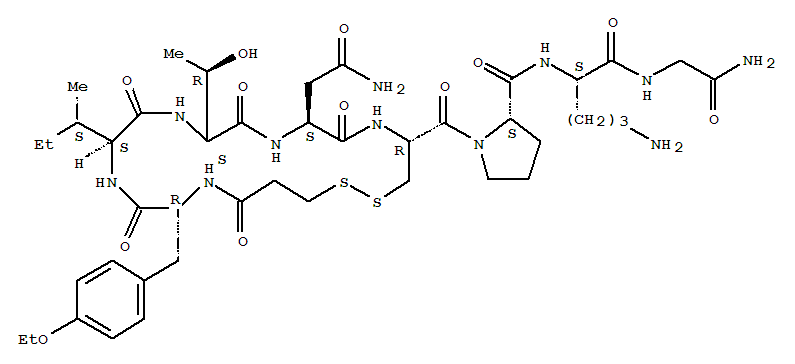
CAS:90779-69-4
CAS:128270-60-0
